





A $118.5 million project will inject artificial intelligence analysis into the footage of 20 schools, while documents remain inaccessible. The institutions say the cameras will be linked to the “Smart City” but fail to clearly explain how “suspicious” behavior will be defined, on what basis the children’s data will be processed and who will oversee the system.
Denada Jushi
“I am concerned about the model that is being presented to children regarding monitoring in schools, because I am a mother and my child’s data could be in the wrong hands tomorrow.”
This was the message that reached the ACQJ editorial office in early August from FY, a parent who will take his child to one of the schools selected for the “Smart City” project.
What is the “Smart City” project?
20 schools in Tirana will be connected to the “Smart City” system, where artificial intelligence will analyze images and signal situations considered dangerous.
The government presented this plan as a way to increase safety in schools, following repeated incidents that have occurred in these facilities!
Of course, safety is very important, but in this case there are a number of concerns related to the implementation of this model, because children are at the center of monitoring!
Although part of the “Smart City” project, this is a monitoring system that will extend to 873 locations in Albania, in 24 cities and 28 border crossing points.
Why has it raised concerns?
For years, these schools have been monitoring the premises, in corridors or courtyards, but the introduction of AI elements into image analysis could be considered a concern.
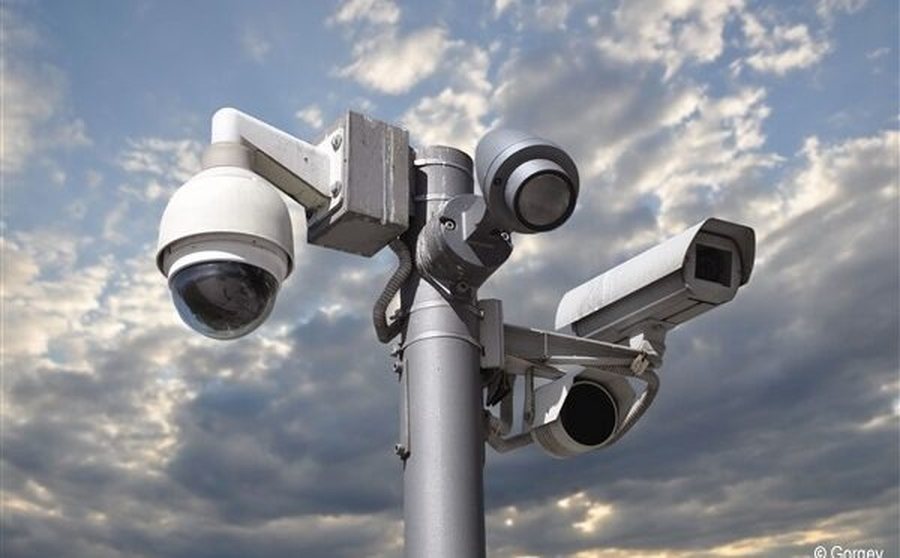
The Ministry of Interior tells ACQJ that no new cameras will be installed in the 20 selected schools, but existing systems will be integrated into the central platform.
“The intelligent functionalities are realized by the video analysis platform and not by the cameras themselves,” says the Ministry of Interior.
So, AI will automatically analyze footage and identify “events or behaviors pre-programmed as potentially dangerous or suspicious.”
But it is not yet clear what exactly the algorithm considers suspicious behavior in a child and how accurately it can determine it.
Denisa Kele, an expert in cybersecurity and artificial intelligence, says that a distinction must be made between identifying an object and interpreting human behavior.
“Identifying an object in a picture that resembles a weapon is technically more measurable; determining whether a student’s behavior is ‘aggressive’ or poses a risk is much more complex and context-dependent,” says Kele.
It may happen that systems produce alerts for situations that do not pose a risk, but also fail to identify a real risk.
“AI can assist with safety, it should not become an ‘algorithmic judge’ of children’s behavior,” says Kele.
One of the questions that has not been clarified is who will store the footage and for how long.
We contacted the State Police and the Ministry of Education, but the only one that responded was the Ministry of Interior, which told us that the State Police will not have access to all school footage.
The footage will be stored locally by educational institutions for a maximum of 30 days. The police will only receive alerts generated by the system. However, these relevant alerts will be stored in the central system of the State Police for one year.
The ministry also says that no audio will be processed and that the data will remain within Albanian territory.
Expert Kele raises another issue of concern. Even if facial recognition is not currently used, this does not necessarily mean that the infrastructure cannot enable it in the future.
“If the cameras have sufficient resolution and quality, new analytical functions, potentially including facial recognition or other forms of biometric analysis, could be added later through software,” she says.
Children’s rights
For Suela Koçibellinj, a children’s rights activist, technology can be used for safety, but it cannot replace human prevention mechanisms.
“The first measures should have started from strengthening human prevention mechanisms: communication and cooperation between the child, parent and teacher,” says Koçibellinj.
For him too, the problem is not the cameras, because they have been around for years; the difference is the implementation of AI.
“If the system is not limited to just recording images, but also analyzes and interprets behavior or situations, then the issue becomes much more sensitive.”
Koçibellinj wants parents to know what the system analyzes, who verifies an alarm, and what happens before a technological alert has consequences for the student.
“Their child should not face consequences just because an algorithm misinterpreted a behavior, a game, or a situation that is completely normal for their age.”
The Minister of Education, Mirela Kumbaro, announced that September 14, which coincides with the first day of this school season, will be used for introductions and discussions with the parents of these 20 schools.
The Minister thus admitted that so far there has been no preliminary discussion process, but only implementation!
The project affects minors. Some of the questions were addressed to institutions responsible for education, data protection, and local administration.
The Ministry of Education was asked what criteria were used to select the 20 schools, whether parents, students and staff were informed, and how many alerts the system generated. As of the publication of this article, it had not responded.
The Municipality of Tirana was asked about the 20 schools, technology, data management, the possibility of facial recognition, and the reason for choosing the United Arab Emirates model. The Municipality also did not answer the questions.
The Commissioner for the Right to Information and Personal Data Protection was asked to clarify whether prior consultation had been carried out, whether a data protection impact assessment, DPIA, had been carried out, what the legal basis is for processing images of thousands of minors and whether facial recognition could be used.
The Commissioner says that the responsibility for the data lies with the institution that will handle its processing and does not confirm or deny whether there has been consultation on this issue, but says that it is overseeing it, without being clear in what way.
The lack of these responses shows that, even in sensitive issues such as cases where children are at stake, institutions are not accountable for either transparency or the responsibilities they should have!
But, if we go to look at the models that Europe offers us, where we aspire to go, we see a completely different approach!
Europe sets borders!
European experience shows that cameras and algorithmic image analysis are not treated as the same thing.
In France, the Municipality of Nice used an algorithm to automatically and in real time analyze camera footage near school entrances to identify illegally parked vehicles.
On January 30, 2026, the Conseil d’État ruled that French law allowed video surveillance of public spaces, but that this could not be interpreted as permission for the systematic and automatic analysis of images by algorithms. This required a legal basis.
In Sweden, a school in Skelleftea used facial recognition to record student attendance. The Swedish Data Protection Authority imposed a fine of 200 Swedish kronor and found a violation of GDPR rules for processing biometric data.
These two cases are the clearest evidence that technology in schools is not banned, but they provide examples of how the shift from recording footage to algorithmic analysis of people requires another level of legal scrutiny.
However, even though in Albania for years everything has been undertaken and done in the name of the country’s integration into the EU, in this case Albania went towards the Abu Dhabi model, paradoxically a country that is not known for respecting human rights!
Abu Dhabi is part of a state constantly criticized by international organizations for its respect for human rights.
The financing agreement has been signed with the Abu Dhabi Fund for Development, while the Ministry of Interior confirms that on December 19, 2025, an agreement was signed with representatives of the international consortium Presight AI for the implementation of “Smart City”.
But the full contract, annexes, technical specifications, the method of selecting the operator and the specific value of the 20 schools component were not made available following the request for information.
It was not even explained why and on what basis the “Abu Dhabi” model was chosen.
The ministry argued that the documentation contains technical and operational elements related to security and cited the loan agreement with the Abu Dhabi Fund for Development, which provides for confidentiality for ADFD documents, data and materials.
But what makes the project even more controversial, besides the problems and uncertainties associated with surveillance, is the financial cost.
The Albanian government has secured a $118.5 million loan from the Abu Dhabi Fund for this project. According to what has been published in the media so far, after the institutions refused to provide official data, the repayment term will be 15 years, with an interest rate of 4% per year.
Of course, this project is broader than schools in Tirana; it will extend throughout the country.
The cost of the project raises serious questions, and above all, the lack of transparency increases this question!
This is where the element of transparency comes in: the government allows the analysis of images of children or citizens, but the documentation that would allow public scrutiny of the technology, its cost, and guarantees has not been made accessible.
From the conversations we had with parents in the field, their response is unified:
“We still don’t know how it works.”
Despite all the efforts to understand more about the “Smart City” project or to become more familiar with the contracts, what they foresee and whether there was consultation, even at the end of this article, the question marks are still big!
Institutions do not respond and “hide” behind confidentiality, but take action against children without any prior consultation, while parents will only be notified on the first day of school!
There is an open and ongoing discussion on this issue in Europe, America and other countries, where “Smart Cities” are often considered an “Orwellian nightmare” that risks turning society into a “Big Brother” model, presenting technology as progress, but in reality sacrificing privacy and freedom. || – acqj.al